DMCA Counter-Notice: What It Means and What to Do
You filed a DMCA takedown and it worked — the pirated content came down. Then you received a counter-notice. Here’s what it means, what the law requires, and your options as the copyright holder.
You did everything right. You found your course or content being shared illegally, you filed a proper DMCA takedown notice, and the platform removed it. Then, a few days later, you get an email from the platform saying the other party has filed a counter-notice — and unless you take further action, the content will be restored.
If this is your first time dealing with a counter-notice, it can feel alarming. But it's a normal part of the DMCA process, and understanding how it works puts you in a much stronger position. This guide explains exactly what a counter-notice is, what the law requires of both sides, and what your options are as the copyright holder.
What Is a DMCA Counter-Notice?
A DMCA counter-notice is a formal legal response filed by someone whose content was removed following a DMCA takedown. It's defined in Section 512(g) of the Digital Millennium Copyright Act and exists to prevent abuse of the takedown process. The logic behind it is straightforward: if someone believes their content was removed by mistake or misidentification, they should have a mechanism to challenge that removal.
To file a valid counter-notice, the respondent must provide:
- A physical or electronic signature.
- Identification of the material that was removed and the location where it appeared before removal.
- A statement under penalty of perjury that the material was removed or disabled as a result of mistake or misidentification.
- The subscriber's name, address, and telephone number.
- Consent to the jurisdiction of a federal district court (the district where the subscriber resides, or if outside the U.S., any district where the service provider may be found).
- Consent to accept service of process from the person who filed the original takedown notice.
That last point is important. By filing a counter-notice, the respondent is formally consenting to be sued in U.S. federal court and providing their real identity and address. This is not a casual form — it carries real legal weight.
When You Receive a Counter-Notice (As a Copyright Holder)
When a platform receives a valid counter-notice, they are required to forward it to you — the original complainant. The notification will typically include the counter-notice itself and a clear statement that the platform intends to restore the content unless you take legal action within a specified window.
The first thing to understand: receiving a counter-notice does not mean you were wrong. It means the other party is formally disputing your claim. In the context of piracy, it can mean anything from a legitimate fair use argument to a pirate rolling the dice on the chance that you won't follow through.
A counter-notice is not a lawsuit. It is not a finding against you. It is a formal dispute that starts a clock — and you have options at every step. Read the notice carefully, note the timeline, and evaluate your next move.
The 10–14 Business Day Timeline
Here is the critical timeline mandated by Section 512(g): once a platform receives a valid counter-notice and forwards it to you, they must restore the removed content "not less than 10, nor more than 14, business days" after receiving the counter-notice — unless you notify the platform that you have filed a court action seeking to restrain the subscriber from continuing the infringing activity.
In practice, this means you have roughly two to three calendar weeks from the date the counter-notice was filed to decide your course of action. If you do nothing within that window, the platform is legally required to put the content back up.
The clock is strict. Platforms follow it because their own safe harbor protection under the DMCA depends on complying with these timelines. Do not expect extensions or exceptions.
Your Three Options as a Copyright Holder
When you receive a counter-notice, you have three paths. Each has different costs, timelines, and implications.
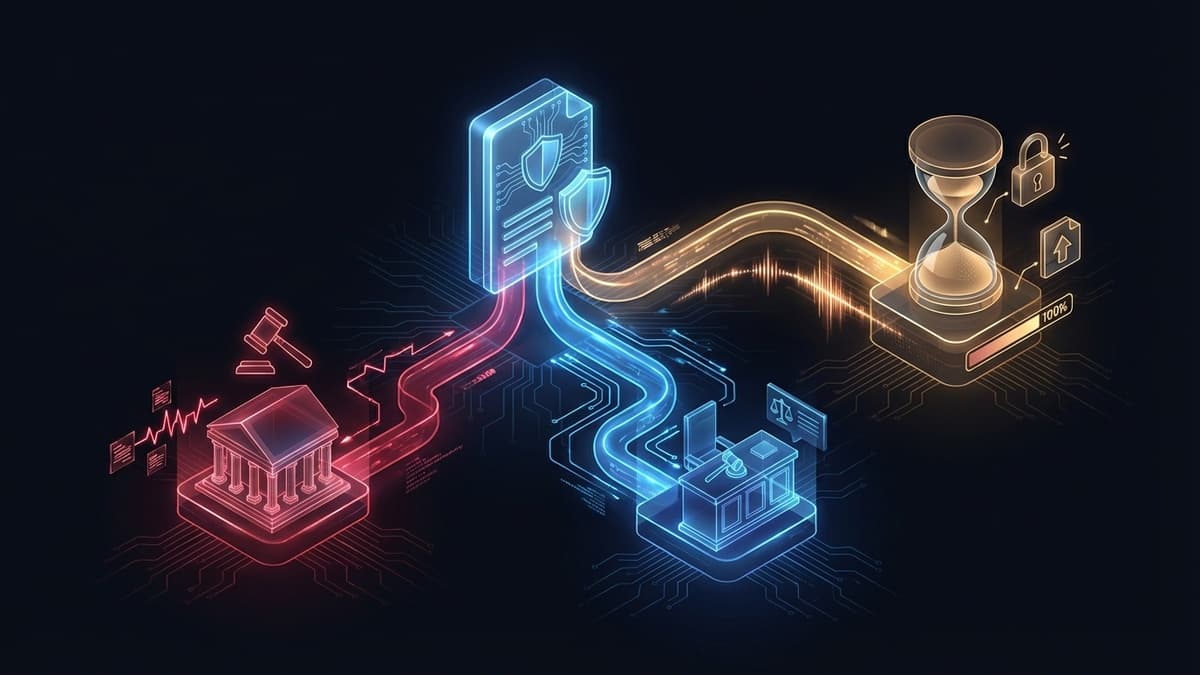
Option 1: File a Federal Lawsuit
The most definitive option — and the most expensive. If you notify the platform that you have filed a federal copyright infringement lawsuit against the person who submitted the counter-notice, the platform will keep the content down pending the outcome of the case.
Federal copyright litigation is serious. You will need an attorney, and the costs can range from tens of thousands of dollars for a straightforward case to significantly more for contested litigation. However, if you have a registered copyright and the infringement is clear-cut, this path gives you the strongest possible outcome — including the potential for statutory damages and attorney's fees.
Notable cases have established important precedent here. In Lenz v. Universal Music Corp. (2015), the Ninth Circuit ruled that copyright holders must consider fair use before filing a takedown — but the case also reinforced the legitimacy of the takedown-and-counter-notice system. In Online Policy Group v. Diebold (2004), a copyright holder that filed takedowns in bad faith was hit with $125,000 in damages under Section 512(f). The lesson: be confident in your claim before escalating.
The decision to file a federal lawsuit should always be made with the advice of a copyright attorney. This guide provides legal information, not legal advice. The strength of your claim, the jurisdiction involved, and whether your copyright is registered all affect the calculus significantly.
Option 2: The Copyright Claims Board
The Copyright Claims Board (CCB)is a newer option that many copyright holders don't yet know about. Established by the CASE Act of 2020 (signed December 27, 2020) and operational since June 16, 2022, the CCB is a tribunal within the U.S. Copyright Office designed to handle small-dollar copyright claims without the cost of federal litigation.
Key details for copyright holders:
- The CCB can hear claims related to Section 512(f) — misrepresentation in DMCA notices and counter-notices.
- Maximum damages: $30,000 per proceeding, $15,000 per work (for registered copyrights), or $7,500 per work (for unregistered copyrights).
- Proceedings are conducted largely online, with significantly lower costs than federal court.
- The catch:the respondent can opt out within 60 days of being notified. If they opt out, the CCB cannot hear the case, and you're back to choosing between federal court and doing nothing.
The CCB is most useful when the infringement is clear, the dollar amount doesn't justify full federal litigation, and you want an official resolution without spending $20,000+ on legal fees. It's less useful when the respondent is overseas (they're likely to opt out) or when you need an injunction to keep content down immediately.
Option 3: Do Nothing (and What Happens)
If you do not file a lawsuit or notify the platform of legal action within the 10–14 business day window, the platform is legally required to restore the content. This is not discretionary — it is a statutory obligation under Section 512(g).
However — and this is critical — the content being restored does not mean you have lost your rights. The counter-notice process is purely a procedural mechanism between you, the respondent, and the platform. Your underlying copyright remains fully intact. The statute of limitations for copyright infringement is three years, so you can still pursue legal action later if circumstances change.
In practical terms, doing nothing means the pirated content goes back up on that specific platform. You can still file new takedown notices if new infringing copies appear elsewhere. You can also re-evaluate the litigation question later with more information — including whether the infringement is ongoing and what damages have accumulated.
For many course creators and content creators, the honest calculus is that the cost of federal litigation exceeds the economic harm of one pirate listing. That's a rational decision, not a defeat. The goal is to make piracy as difficult and unattractive as possible across all channels — not to win every single skirmish.
Why Pirates Rarely File Counter-Notices
Here is the reassuring reality: counter-notices from actual pirates are relatively rare. The reason is structural. To file a valid counter-notice, the respondent must:
- Provide their real name and physical address.
- Provide a telephone number.
- Sign a statement under penalty of perjury(a federal crime under 18 U.S.C. § 1621).
- Consent to the jurisdiction of U.S. federal court — meaning they agree to be sued in the United States.
Most pirates are anonymous operators who distribute stolen content for profit or notoriety. The last thing they want is to hand their real identity to a copyright holder and consent to federal jurisdiction. The overwhelming majority of pirates, when faced with a valid DMCA takedown, simply let the content come down and re-upload somewhere else.
This is why persistent, multi-platform enforcement matters more than winning any single takedown battle. A pirate who re-uploads is still vulnerable to another takedown. The friction compounds over time.
The DMCA counter-notice system was designed to protect legitimate disputes — and in practice, that's mostly what it does. The people who file counter-notices are far more likely to have a genuine claim than to be anonymous pirates testing their luck.
When Counter-Notices Are Legitimate
Not every counter-notice is bad faith. There are genuine scenarios where a counter-notice is warranted, and recognizing them protects you from overreacting — or from exposure under Section 512(f), which penalizes materially false takedown claims. In Automattic v. Steiner (2015), a copyright holder who filed a baseless takedown was ordered to pay $25,000 in damages. In Equals Three v. Jukin Media (2015), fair use was successfully raised as a defense.
Common legitimate scenarios include:
- Fair use:The content was used for commentary, criticism, news reporting, or education in a way that qualifies as fair use under 17 U.S.C. § 107.
- Misidentification: Your takedown targeted the wrong content or the wrong user — it happens, especially with automated scanning tools.
- Public domain material: The content is not actually under copyright protection.
- Ownership disputes: The respondent claims they are the actual copyright holder (common in collaborative projects or work-for-hire disagreements).
- Authorized use: The respondent had a license or permission that you may not have been aware of (e.g., a former affiliate or reseller).
- Abusive or fraudulent takedown: The original takedown was filed to harass, suppress competition, or silence criticism rather than to protect genuine copyright.
When you receive a counter-notice, evaluate the claim honestly. If the respondent has a plausible argument — especially around fair use or misidentification — pursuing aggressive legal action could backfire. This is another reason why consulting a copyright attorney before escalating is important.
Key Takeaways
- A DMCA counter-notice is a formal legal dispute under Section 512(g) — not a ruling against you. It starts a clock, not a verdict.
- You have 10–14 business days to file a federal lawsuit or the platform must restore the content. The timeline is strict.
- Your three options: file in federal court (expensive but definitive), use the Copyright Claims Board (lower cost, but the respondent can opt out), or do nothing (content goes back up, but your copyright remains intact).
- Pirates rarely file counter-notices because they must reveal their real identity, consent to federal jurisdiction, and sign under penalty of perjury.
- Legitimate counter-notices exist — fair use, misidentification, and ownership disputes are real. Evaluate honestly before escalating.
- Always consult a copyright attorney before deciding whether to litigate. The strength of your claim, registration status, and jurisdiction all matter.
- Persistent multi-platform enforcement is more effective than winning any single counter-notice battle. Keep filing, keep monitoring.