Why Your Course Is Being Sold on Telegram (And How Takedowns Actually Work There)
Telegram has 950 million users and virtually no automated piracy detection. Here’s how piracy channels actually operate, what happens when you file a DMCA, and the 10 things that improve your odds.

If you sell online courses, Telegram is almost certainly your biggest piracy problem. Not torrent sites. Not Google Drive links. Telegram.
With 950 million monthly active users as of mid-2024 and a file-sharing infrastructure that was essentially designed for large-scale content distribution, Telegram has become the single most common platform where pirated courses show up. And unlike YouTube or Google, there is no Content ID, no automated scanning, and no proactive detection of any kind.
This guide breaks down exactly how Telegram piracy works, what happens when you file a DMCA takedown, what changed after Pavel Durov's arrest in 2024, and the specific tactics that actually improve your success rate. No vague advice — just what we've learned from filing thousands of Telegram takedowns for course creators.
Why Telegram Became the #1 Piracy Platform
Telegram wasn't built to be a piracy platform. But its core features — massive file limits, cloud-hosted storage, anonymous channel creation, and weak moderation — made it inevitable.
Here's what makes Telegram uniquely attractive to pirates:
- 2GB file uploads (4GB for Premium users) — more than enough for full course modules, entire video libraries, or zipped course bundles.
- Cloud-hosted, not P2P.Files uploaded to Telegram are stored on Telegram's servers indefinitely. They don't require seeders like torrents. Once uploaded, a file can be forwarded, linked, and downloaded by an unlimited number of people, forever.
- Anonymous channel creation. Anyone with a phone number (including burner numbers and VoIP) can create a channel in seconds. No identity verification, no waiting period.
- No automated piracy detection. There is no Content ID equivalent. Telegram does not scan uploads for copyrighted material. If no one reports it, no one removes it.
- Channels support unlimited subscribers. A single piracy channel can broadcast stolen content to hundreds of thousands of followers.
The U.S. Trade Representative has included Telegram on its Notorious Markets List since 2021, specifically calling out "large-scale piracy channels" distributing copyrighted material. Governments in Germany, Brazil, and Spainhave all taken enforcement action — Germany fined Telegram €5.125 million in 2022 for failing to comply with content moderation laws, Brazil briefly blocked the app entirely, and Spain ordered a temporary suspension in March 2024 after media companies filed complaints.
None of this has meaningfully slowed piracy on the platform. The infrastructure is simply too well suited for it.
How Telegram Piracy Actually Operates
Understanding the mechanics matters because it dictates your enforcement strategy. Telegram piracy runs on two structures: channels and groups.
Channels (Broadcast-Only)
Channels are the primary piracy vehicle. An admin creates a channel, posts pirated files or links, and subscribers receive them — no interaction required. Channels have no member cap for subscribers and function like a one-way broadcast. The admin posts; everyone downloads.
A typical piracy channel is organized by niche — "Premium Courses 2026," "Marketing Masterclasses," "Leaked Courses" — and new content appears within days (sometimes hours) of release.
Groups (Up to 200,000 Members)
Groups function as the request layer. Members post what they're looking for — "Anyone have [Your Course Name]?" — and other members respond with links, often pointing to a channel or a file-host URL. Groups can hold up to 200,000 members and are searchable by name.
The Persistence Problem
Because files are stored on Telegram's cloud rather than on individual devices, they persist indefinitely and can be forwarded an unlimited number of times. A single upload to one channel can propagate across dozens of channels and groups within hours. There is no expiration, no bandwidth limit, and no download cap.
Many creators assume Telegram is fully encrypted and therefore untouchable. That's wrong. Regular channels and groups are NOT end-to-end encrypted. Only "Secret Chats" (one-to-one only) use E2E encryption. Telegram can see, access, and remove content in any standard channel or group.
The Bot Economy: Automated Piracy at Scale
If channels are the storefronts, bots are the vending machines. Telegram bots can be programmed to serve files automatically in response to user commands — no human admin required.
A typical piracy bot works like this:
- A user sends a command or keyword (e.g., the course name) to the bot.
- The bot searches its database and returns the file or a download link instantly.
- Some bots require "credits" — earned by inviting new members to a channel — creating a viral growth loop.
Bot-based distribution is harder to enforce against because the bot itself is the delivery mechanism. Taking down a single channel doesn't disable the bot, and the bot can serve content across multiple channels simultaneously.
How to File a DMCA Takedown with Telegram
Telegram does accept DMCA takedown notices, but the process is minimal and entirely email-based. There is no online form, no portal, and no ticket system.
The Process
- Send an email to dmca@telegram.org — this is the only official channel for copyright complaints.
- Include all six DMCA elements — your identity, proof of ownership, the specific infringing URLs, contact information, the good-faith statement, and the perjury statement.
- Provide specific message links. This is critical. A link like
t.me/channelname/456pointing to the exact message containing your pirated content is far more effective than reporting the channel URL alone. - Attach proof of ownership — a link to your original course sales page, platform dashboard screenshots, or registration certificates.
Specific message links (e.g., t.me/channelname/456) get significantly better results than channel-level reports. When you report a channel URL without specifying which messages infringe, Telegram is less likely to act. File against individual messages, not entire channels.
What to Expect After Filing
This is where Telegram differs sharply from platforms like Google or YouTube. Response times are highly variable.
- Best case: specific message takedowns processed within 24-48 hours.
- Typical case: responses take days to several weeks.
- Worst case: some notices receive no response at all.
Based on practitioner-reported data, here are realistic success rates:
- Specific message takedowns: roughly 60-80% success rate when notices are properly formatted with exact message links.
- Full channel removal: roughly 30-50% success rate, and usually only after multiple complaints or evidence of systematic infringement.
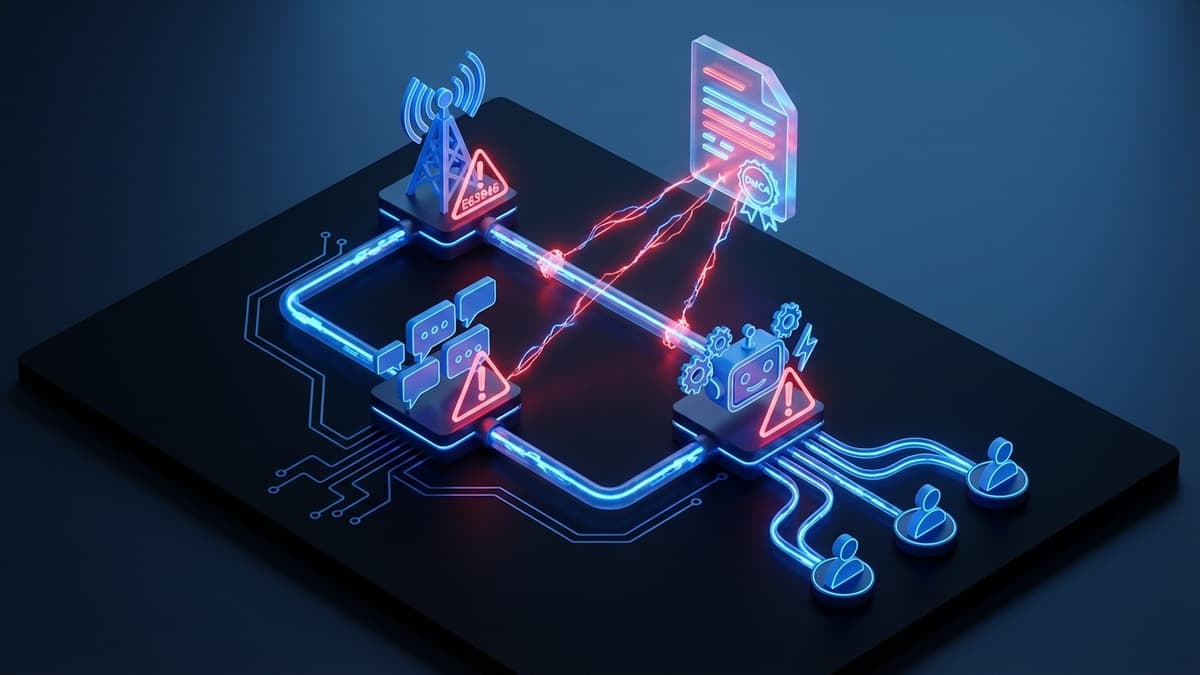
There is no automated confirmation system. You may receive a brief email acknowledging your notice, or the content may simply disappear without notification. There is no dashboard to track status.
The 2024 Turning Point: Durov's Arrest and Policy Changes
On August 24, 2024, Telegram founder Pavel Durov was arrested in France and charged with enabling illegal activities on the platform, including the distribution of copyrighted material. This was a watershed moment.
Within weeks, Telegram made its most significant policy shift in years:
- Increased content moderation — Telegram publicly acknowledged it would invest more resources in responding to legal takedown requests.
- Data sharing with authorities — for the first time, Telegram indicated willingness to share user data with law enforcement in response to valid legal orders.
- Faster response times — anecdotally, DMCA response times improved in the months following the arrest, though they remain inconsistent.
It is too early to call this a permanent shift. Telegram's culture has always been privacy-first, and enforcement improvements have been uneven. But the direction of travel is clear: external legal pressure is forcing Telegram to take copyright complaints more seriously than it did before 2024.
Why Telegram Takedowns Are Harder Than Other Platforms
Even with the post-2024 improvements, Telegram remains one of the hardest platforms to enforce against. Here's why:
- Channel migration.When a piracy channel gets taken down, a replacement channel appears within minutes. Operators simply create "courseleaks2" or "premiumcourses_backup" and notify their audience through secondary channels or groups. The cycle restarts immediately.
- Re-upload speed. Even when specific messages are removed, the same content typically reappears within hours to days — often in the same channel.
- No Content ID equivalent.Every takedown is manual. There is no way to register your content and have Telegram automatically block future uploads, the way YouTube's Content ID does.
- Email-only process. With no online portal, no ticket tracking, and no status updates, enforcement requires persistent follow-up with no feedback loop.
- Jurisdictional complexity.Telegram's legal entity is based in Dubai, its servers are distributed globally, and its users are everywhere. This makes legal escalation significantly harder than with U.S.-based platforms.
10 Tips That Actually Improve Your Success Rate
These are drawn from real enforcement work — not theoretical best practices, but the things that actually move the needle:
- Always use specific message links. Link to
t.me/channelname/456, not justt.me/channelname. This is the single biggest factor in whether your notice gets actioned. - Use proper DMCA format.Include all six required elements. Telegram's legal team processes notices that look legally sound faster than informal complaints.
- Attach clear proof of ownership. Link to your original course sales page. Include screenshots of your creator dashboard showing the content. The easier you make verification, the faster the response.
- File against individual messages, not just channels. Message-level takedowns have roughly double the success rate of channel-level requests.
- Send separate notices for separate channels. Bundling multiple channels into one email tends to slow processing. One channel per notice.
- Follow up after 7 days.If you haven't received a response or seen the content removed, send a follow-up email referencing your original notice.
- Monitor for re-uploads. Takedown success is temporary without monitoring. Set a weekly search for your course name on Telegram.
- Report to search engines simultaneously. Many users find piracy channels through Google and Bing search results. Getting the channel URL delisted from search engines cuts off a major discovery path.
- Document everything. Keep a log of every notice sent, every response received, and every re-upload detected. This builds an evidence trail that strengthens future complaints and supports escalation.
- Target the bots, not just the channels.If a bot is serving your content, report the bot username as well. Bot takedowns disrupt the automated distribution layer that channels alone can't.
When DIY Telegram Enforcement Stops Working
Filing your own Telegram takedowns is entirely doable for one or two incidents. But piracy on Telegram is rarely a one-time problem. If your course has any meaningful audience, the pattern is predictable:
- You find a channel sharing your content, file a takedown, and the content is removed (if you're lucky).
- Within days, the same content appears in a new channel — or the same channel re-uploads it.
- You file again. And again. Each notice takes 20-30 minutes to prepare properly.
- Meanwhile, the content has been forwarded to channels you haven't found yet, shared in private groups, and indexed by piracy bots.
At some point, the hours you spend on enforcement start costing more than what a professional service charges. That's the inflection point.
A dedicated anti-piracy service brings three things you can't replicate on your own: continuous monitoring (automated scanning across Telegram channels, groups, and bots), established relationshipswith Telegram's abuse team (which meaningfully improves response times), and multi-platform enforcement— because your pirated content isn't just on Telegram. It's on torrent sites, file hosts, Google, Bing, and search engines most creators never check, like Yandex and DuckDuckGo.
The question isn't whether you can do it yourself. The question is whether your time is better spent creating content or chasing pirates across a platform that was built to make enforcement as difficult as possible.
Key Takeaways
- Telegram is the #1 platform for course piracy — 950M+ users, 2GB file uploads, cloud-hosted persistence, and zero automated detection.
- Piracy runs through channels (broadcast), groups (requests), and bots (automated delivery). All three require different enforcement approaches.
- DMCA takedowns go to dmca@telegram.org. Specific message links (t.me/channel/123) get 60-80% success rates; channel-level reports land around 30-50%.
- Durov's arrest in August 2024 triggered real policy changes — more moderation, data sharing with authorities — but enforcement remains inconsistent.
- Channel migration is instant. A takedown without ongoing monitoring is a temporary fix at best.
- Regular Telegram channels are NOT encrypted. Telegram can access and remove content — the bottleneck is willingness and process, not technical capability.
- When the re-upload cycle outpaces your filing speed, professional enforcement with continuous monitoring is the only way to stay ahead.