Patreon Leak Removal: How to Get Stolen Posts Taken Down
Your members-only posts are circulating on a rip site, a Discord server, or a Telegram channel — and Patreon itself can only fix part of the problem. Here's where leaked Patreon content actually ends up, what Patreon will and won't remove, and the off-platform playbook that gets stolen posts taken down.

Patreon leaks have a particular sting. Your patrons pay for early pages, full lectures, bonus episodes, process files, premium sets — and then a stranger's rip site offers all of it for free, often organized by tier and updated within days of every new post. It happens to comic artists and illustrators, to writers and educators, to podcasters, and to premium content creators alike: anyone whose income depends on a paywall depends on that paywall meaning something.
The uncomfortable part is that Patreon itself can only fix a slice of the problem. Patreon's copyright process covers material hosted on Patreon — a re-upload on someone else's Patreon page — while the overwhelming majority of leaks live somewhere else entirely. This guide covers both halves: where stolen Patreon posts actually end up, what Patreon will and won't remove, the off-platform playbook that gets leaks taken down, why a single subscriber can supply an entire leak site, and how to keep watch without making piracy your second job.
Where Stolen Patreon Posts Actually End Up
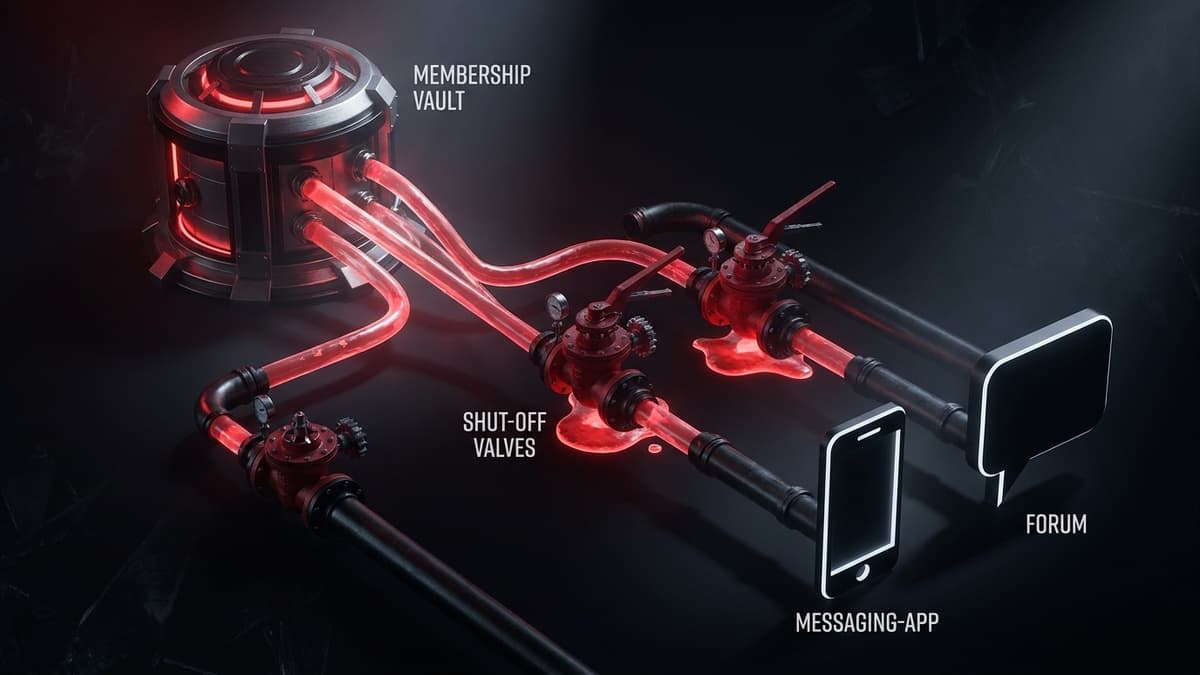
Leaked Patreon content concentrates in four kinds of places, and almost none of them are on Patreon. Knowing the categories matters because each one has a different removal path.
- Rip and aggregator sites. Dedicated sites that collect paywalled content and republish it, often organized by creator name so anyone searching for you finds your entire archive for free. These sites are built to profit from stolen work — ad revenue on top of your posts — and they are usually the most damaging leak location because search engines index them under your own name.
- Discord servers.Private and semi-private servers where members share paywalled posts in dedicated channels, sometimes trading access to different creators' tiers. Discord's scale makes it a common redistribution layer for exactly the audiences who already know your work.
- Telegram channels and groups.Public channels that repost paywalled material openly, searchable from inside the app. Telegram's combination of anonymity and reach makes it a persistent home for leaked subscription content of every kind — courses, comics, premium sets.
- Forums and file-host links. Community boards and link indexes that point to archives parked on file hosts. The forum thread is the storefront; the file host is the warehouse — and the warehouse link is often the more productive takedown target.
One pattern worth internalizing early: the leak location you find first is rarely the only one. A post that surfaces on a rip site has usually also passed through a Discord server or Telegram channel, and removals from one venue don't touch the others. That's why the playbook below works venue by venue.
What Patreon Will Remove — and What It Can't Touch
The short answer: Patreon removes infringing material hosted on Patreon, and nothing beyond that. Its Copyright & Trademark Policies accept DMCA notifications for material stored on Patreon's system or network, and state plainly that Patreon does not accept notifications about material that doesn't reside on or pass through its system. In other words: if someone re-posts your work on their own Patreon page, Patreon is the right door to knock on. If your work is on a rip site, a Discord server, or a Telegram channel, Patreon has no authority there — and no report form you file with Patreon will change that.
For the cases Patreon doescover, the process is straightforward: submit a compliant DMCA notification through Patreon's copyright form or by email to copyright@patreon.com, identifying your original work, the infringing Patreon URL, your contact information, and the standard good-faith and accuracy statements. Patreon also applies a repeat infringer termination policy to creators and patrons who keep infringing — so reporting matters even when a single takedown feels small. Two practical notes from Patreon's own policy: it may pass your name and contact information to the person you reported, and it suggests using an agent to file if that concerns you — a real consideration for premium content creators who don't want their legal name in an infringer's inbox. For a full walkthrough of the notice elements and where each detail goes, see our Patreon DMCA takedown guide.
This article is practical guidance from people who file takedowns for a living — it isn't legal advice. A DMCA notice is a legal statement: you're declaring a good-faith belief that the use isn't authorized, that the information in your notice is accurate, and — under penalty of perjury — that you're authorized to act for the owner of the work. Knowingly misrepresenting that material is infringing carries liability under Section 512(f). Only file against work that is actually yours, and talk to an intellectual property attorney for edge cases.
The honest framing, then: Patreon's reporting path is one tool for one venue. Everything below is what removal looks like across the venues where most leaks actually live.
The Off-Platform Removal Playbook
The playbook runs in a fixed order: evidence first, then the host-level DMCA, then search delisting, then platform reports for Discord and Telegram. Work through it venue by venue for every leak you find.
Step 1: Document everything before you file anything
Leak pages move, rename, and vanish — sometimes because of your own takedowns. Before reporting, save the exact URL of every infringing page, take full-page screenshots that show both your content and the page address, and note the date. Keep your original Patreon posts live as evidence of ownership and publication date. Every takedown path below asks you to identify the infringing location precisely, and evidence you didn't capture on day one is evidence you may never get back.
Step 2: DMCA the host behind rip and aggregator sites
Dedicated leak sites don't respond to polite requests — their business is your content. Some publish a DMCA contact and process notices to keep their hosting; when they don't, go over their head to the hosting provider's abuse desk. A lookup of the site's infrastructure identifies the host, and a compliant DMCA notice to that host — your work identified, the infringing URLs listed, your contact details, your signature, the good-faith and accuracy statements — puts the host to a choice: remove the material expeditiously, or forfeit the DMCA safe harbor that shields it from liability for what its customers host. The required elements are specific and hosts reject sloppy notices; our guide on how to file a DMCA takedown walks through each one.
Step 3: Delist what you can't remove
Some leak sites sit on offshore or unresponsive hosts and simply ignore notices. You often can't delete the file — but you can delete the audience. Copyright removal requests to Google, Bing, and Yandex pull the leak pages out of search results for your name and post titles, which is how most new visitors find them — and because DuckDuckGo's traditional results are syndicated from Bing, a successful Bing removal clears DuckDuckGo too (verify there once Bing confirms). Most creators (and plenty of services) stop at Google; leaving Bing and Yandex untouched leaves the side doors open. Our search engine delisting service exists precisely for this rung — a leak page nobody can find stops costing you patrons.
Step 4: Report Discord servers and Telegram channels
Both platforms accept copyright reports, and both reward precision and persistence over volume. For Discord, report the specific server and messages redistributing your posts through its copyright process — message links from your evidence file do most of the work. For Telegram, report infringing public channels and groups through its abuse and copyright contacts, again with direct message links. Expect follow-up rounds rather than instant results, and expect mirrors: a removed channel often reappears under a new handle. The mechanics, contact points, and escalation paths differ enough per platform that we've documented each separately — see the Discord takedown and Telegram takedown guides.
Match the effort to the venue. A Patreon re-upload needs Patreon's form, not a host notice; a bulletproof rip site needs delisting, not another unanswered email. Filing the right instrument at the right layer is most of what separates removals that stick from removals that stall.
One Patron, Thousands of Copies: Tier Leaks and Watermarking
Here's the dynamic that makes Patreon leaks feel so personal: it usually takes exactly one subscriber. One person joins your lowest tier — or gets pledged in by a leak community — downloads or screenshots everything behind the paywall, and feeds it to a rip site or channel where an unlimited audience reads it for free. The paywall did its job perfectly; it controlled who could view your work. What it cannot control is what a paying viewer does afterward, and no platform setting changes that.
This is where watermarking earns an honest assessment, because it's often sold as more than it is:
- Visible watermarks deter, they don't prevent. A clear mark with your name or page URL makes stolen copies less attractive to repost and keeps your attribution attached when they spread anyway. Determined leakers crop or cover marks; casual resharers mostly don't bother.
- Per-patron marking is a tracing tool.Placing a subtle, unique identifier on each subscriber's copy — a per-account mark on images or files — can tell you which account leaked, which lets you remove that member and strengthens your evidence. It still doesn't stop the leak that already happened, and it's only as good as your willingness to actually check marks against your member list.
- Neither replaces takedowns. Watermarks operate before the leak; removal operates after it. You need both layers, and the second one is the one leak sites actually feel.
The practical posture: watermark what's cheap to watermark, treat per-patron marking as worthwhile if your tooling supports it without wrecking the patron experience, and put the hours you save into detection and removal — the layers with teeth.
Monitoring Cadence — and When to Delegate
A monthly sweep is the floor; weekly is the standard once you've been leaked; and delegation makes sense the moment re-uploads outpace your filings. Here's what the sweep looks like.
- Search your creator name and two or three distinctive post titles in quotes on Google, Bing, and Yandex — Yandex often still surfaces leak pages Google has already delisted. Check DuckDuckGo too as a quick cross-check, though its results mirror Bing rather than forming a separate index.
- Run the same names through Telegram's in-app search, where public leak channels are discoverable directly.
- Set Google Alerts for your creator name and page name so newly indexed leak pages come to you between sweeps.
- Treat audience signals as triggers: a member mentioning a "free version," a pledge dip without a traffic dip, or a new account that joins, downloads everything, and cancels — any of these is a reason to sweep the same day.
Do it yourself while the math works: one or two leaks on platforms with clear report forms, a sweep that takes under an hour, removals that stay removed. Delegate when the math breaks — when your work is spreading across rip sites, Discord, Telegram, and search results at once, each with its own procedure; when hosts ignore your notices and the fight shifts to delisting and escalation; or when the hours you spend chasing mirrors are hours not spent making the work your patrons actually pay for. That's the job our leaked content removal service does end to end — human investigators tracing leaks across every layer, filing at the right level, and staying on re-uploads — with 24/7 monitoring as the always-on layer once the initial cleanup is done. Whoever you hire, press on two questions: how deep does coverage go beyond Google, and who follows up when the first notice is ignored.
Key Takeaways
- Leaked Patreon posts concentrate in four venues — rip/aggregator sites, Discord servers, Telegram channels, and forum/file-host links — and each has its own removal path.
- Patreon removes infringing material hosted on Patreon (via its copyright form or copyright@patreon.com) and applies a repeat infringer policy — but its own policy says it won't act on material outside its system. Off-platform leaks are yours to pursue directly.
- The off-platform order is fixed: document evidence, DMCA the host, delist what won't come down from Google, Bing, and Yandex (a Bing removal clears DuckDuckGo too), and report Discord and Telegram with message-level precision.
- One subscriber can supply an entire leak site. Watermarks deter and per-patron marks trace, but neither prevents — takedowns are the layer leak sites actually feel.
- Sweep monthly at minimum, weekly once you've been leaked, and delegate when re-uploads outpace your filings — at that point professional reach and follow-through stop being a luxury and start being math.