Course Platform Piracy Compared: Teachable vs Kajabi vs Thinkific vs Skool
Teachable, Kajabi, Thinkific, Skool — or Udemy? Here's an honest look at how each platform actually handles piracy: the friction each adds, the enforcement each does for you, and the part no platform can fix.
If you're choosing between Teachable, Kajabi, Thinkific, and Skool — or you already sell on Udemy — you've probably asked some version of the same question: which platform keeps my course safest from piracy?It's the right question to ask before you move years of work onto someone else's infrastructure. The honest answer is more nuanced than any platform's marketing page will tell you.
This comparison covers what each of the five major course platforms actually does about piracy: the friction each one adds against casual ripping, what each will enforce on your behalf, and — most importantly — the large category of piracy that no platform touches, no matter which one you pick.
The Honest Answer: No Platform Prevents Piracy
Let's clear this up before the platform-by-platform breakdown: no course platform prevents piracy— there is no "most secure course platform" in the prevention sense. Anything a paying student can watch on a screen can be re-recorded from that screen. Screen-capture software defeats the players course platforms actually use, and even heavyweight hardware DRM — the kind that black-screens capture software — can't stop someone pointing a camera or a second device at the screen. It only raises the effort required; it doesn't make a pirate copy impossible. If someone with $20 and bad intentions enrolls in your course, they can walk out with a watchable copy. That is true on all five platforms in this article.
What platforms do meaningfully control comes down to two things:
- Leak friction — how hard it is to rip a clean, shareable file. Streamed playback, download controls, and gated member areas all raise the effort bar, which filters out the lazy majority of would-be pirates.
- Enforcement scope— what the platform will act on when infringement happens. This is narrower than most creators assume: platform copyright processes generally cover content hosted on the platform's own infrastructure, not the wider web.
Platform choice decides how a leak starts. It doesn't decide what happens after the leak — and the "after" is identical work on every platform.
One housekeeping note: platform features and plan tiers change frequently. Where a specific setting matters to you, verify it against the platform's current documentation and your own plan rather than assuming — including anything in this article.
Udemy: The Marketplace That Fights Its Own Fight
Udemy is the outlier in this comparison: because it's a marketplace that takes a share of every sale, piracy of your course costs Udemy its own money — which gives it a stronger incentive to fight piracy than any self-hosted platform on this list. The trade-off is that you, the instructor, get almost no control over how that fight is run.
On the friction side, Udemy hosts course video on its own infrastructure and streams it through its own player and apps. Offline viewing is designed to stay inside the Udemy mobile app rather than handing students a portable video file — desktop lecture downloads are off by default and only exist if you, the instructor, enable them per lecture, so unless you have a specific reason, leave that setting off. On the enforcement side, Udemy runs a Piracy Detection Program that monitors search results and known pirate sites and files takedowns for pirated copies of top marketplace courses, gives instructors a third-party piracy reporting form, and maintains an intellectual property reporting process. Its marketplace model means pirated Udemy courses are a problem it has a direct financial reason to chase.
The catch: you can't set Udemy's priorities, you get little visibility into what's been actioned, and "udemy course free download" sites remain stubbornly easy to find. If your Udemy course is circulating on pirate sites, our Udemy DMCA takedown guide covers what you can do yourself and where the process gets stuck.
Teachable: Real Controls, Enforcement Is On You
Teachable gives you meaningful, creator-controlled friction — but it will not chase leaks across the internet for you. Course video is hosted by Teachable and streamed through its player, and you control whether individual lesson videos are offered to students as downloads. Keep downloads off unless you have a specific reason to enable them: every downloadable lesson is a clean, portable file that can be re-shared with zero effort.
Access to your school is gated by student enrollment, which handles the casual "can I just share my login" layer reasonably well. Check what additional access and content-protection controls your current plan includes — Teachable's feature set varies by tier.
Enforcement is where expectations need adjusting. Teachable's copyright process covers infringement on Teachable's own infrastructure — for example, someone reselling your course from their own Teachable school. A leak on a clone site, a Telegram channel, or a torrent index is outside that scope entirely. Our Teachable DMCA guide walks through both cases.
Kajabi: Gated Member Areas, Same Blind Spot
Kajabi's all-in-one member areas are well gated, and lesson video is streamed through its built-in player rather than served as a raw file — but its enforcement reach ends at sites Kajabi hosts, exactly like Teachable's. From a pure leak-friction standpoint, Kajabi is solid: students log in to a member area, video plays in a streaming player, and nothing is downloadable unless you deliberately attach a file to a lesson.
That last point is worth repeating, because it's the most common self-inflicted leak on Kajabi: don't attach your master video files as lesson downloads. Attach worksheets, transcripts, and slides if you like — but a downloadable MP4 of the full lesson removes every bit of friction the streaming player added.
On enforcement, Kajabi's copyright complaint process is there for infringement hosted on Kajabi — say, a pirate storefront built on Kajabi's own infrastructure. Everything beyond that perimeter is your job. The Kajabi DMCA guide covers the full playbook for Kajabi course creators.
Thinkific: Streamed Video, Plan-Dependent Extras
From a piracy standpoint, Thinkific looks a lot like Teachable and Kajabi: hosted, streamed course video, a gated course player behind student logins, and a copyright process that covers content hosted on Thinkific itself. If someone stands up a copycat school on Thinkific using your material, you have a clear reporting path. If your course surfaces on a file host or a Telegram channel, you don't — at least not through Thinkific.
Thinkific distributes features across its plan tiers, so rather than assuming a specific protection exists, check whether your plan includes the access-control and content settings you care about — download behavior, site access rules, and so on. The honest summary: Thinkific's baseline friction is fine, its differences from Teachable and Kajabi are mostly business-model differences rather than security differences, and its off-platform blind spot is identical. Our Thinkific DMCA guide picks up where the platform's own process stops.
Skool: Strong Community Gating, Video Depends on Your Host
Skool is the odd one out, in both directions. Its membership gating is arguably the strongest protection model on this list — and its video protection offers the fewest guarantees, because classroom video protection on Skool depends on where your video actually lives.
Skool is community-first, and many creators build their classroom by embedding video from an outside host — an unlisted YouTube video, Vimeo, Wistia, or Loom. (Skool also offers native streamed video uploads now; if you use those, your friction is comparable to the other platforms.) When you embed, your protection level is set by the video host's settings, not by Skool. An unlisted YouTube link that leaks into a group chat plays for anyone who has the URL — there's no membership check standing in the way. If you embed, audit the privacy and embed-restriction settings on the host side; that's where your real perimeter is.
The flip side is Skool's structural advantage: a large part of what people pay for in a Skool community — the discussions, the accountability, the cohort, access to you — can't be pirated. A ripped folder of videos doesn't replicate the experience, which blunts the damage a leak does to your sales in a way no download toggle can. If your Skool course has been leaked, the Skool DMCA guide covers how to trace where the files actually live and get them removed.
Side-by-Side Comparison
Every platform leaves you with roughly the same off-platform enforcement burden; only the friction and platform-enforcement columns really differ.
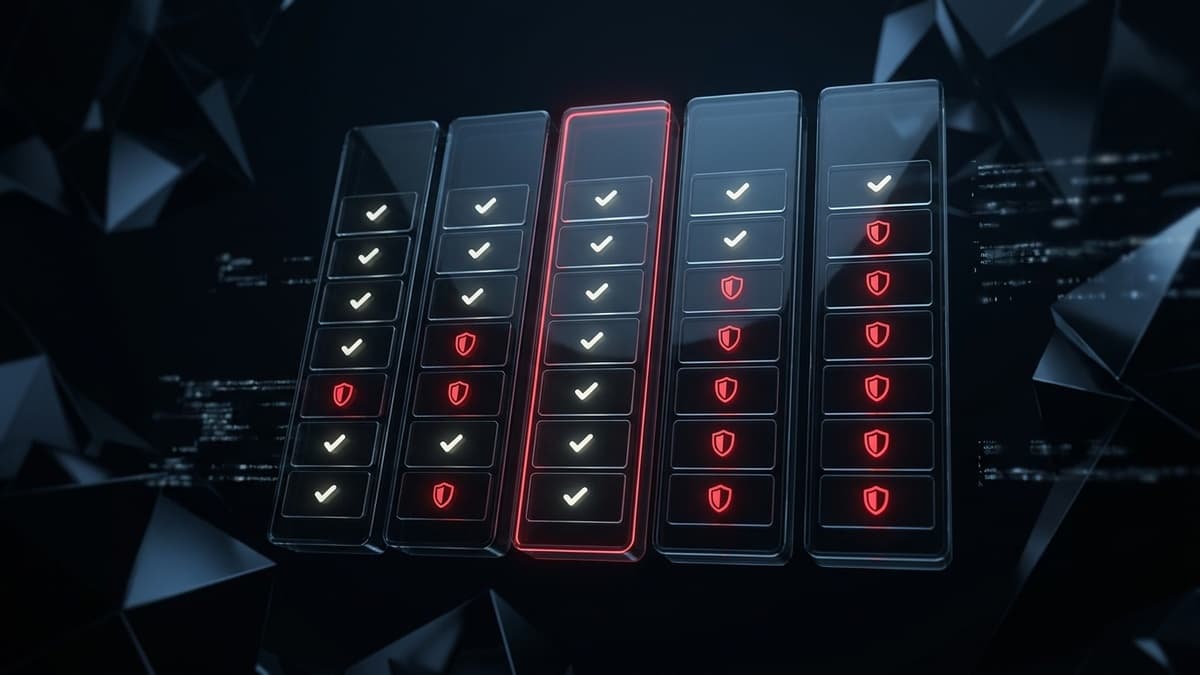
Here's the whole comparison in one honest table. These are qualitative summaries — verify specifics against each platform's current documentation and your plan tier.
| Platform | Video download protection | Piracy enforcement by the platform | Your enforcement burden |
|---|---|---|---|
| Udemy | Streamed in Udemy's player; offline viewing stays inside its app unless the instructor enables lecture downloads | Strongest incentive of the five — marketplace piracy costs Udemy its own revenue | Lower for marketplace rips, but you can't direct priorities; pirate sites still slip through |
| Teachable | Streamed; you control whether lesson videos are downloadable | Acts on infringing content hosted on Teachable schools | High — everything off-platform is yours |
| Kajabi | Streamed; nothing downloadable unless you attach files | Acts on infringing sites hosted on Kajabi | High — everything off-platform is yours |
| Thinkific | Streamed; settings vary by plan — verify yours | Acts on infringing sites hosted on Thinkific | High — everything off-platform is yours |
| Skool | Depends on the video host you embed or upload with | Acts on content inside Skool; the community experience itself is hard to pirate | High — everything off-platform is yours |
Read down the last column and the pattern is unmissable. The middle columns vary; the last one barely does.
What Platform Choice Can't Fix
Here's the punchline this entire comparison builds to: platform choice changes leak friction, but off-platform enforcement is identical work on every platform. Once a copy of your course escapes — and for any course successful enough to be worth pirating, one eventually does — the cleanup job looks exactly the same whether it escaped from Teachable, Kajabi, Thinkific, Skool, or Udemy:
- Clone and "free download" sites listing your course, often ranking for your own course name.
- Telegram channels and Discord servers sharing download links with thousands of members.
- Torrent indexes and file hosts storing the actual files.
- Search results on Google, Bing, Yandex, and DuckDuckGo pointing students-to-be at all of the above.
None of the self-hosted platforms — Teachable, Kajabi, Thinkific, Skool — will do that work for you: it's outside their infrastructure, so it's outside their copyright process. Udemy is the partial exception — its piracy program does chase pirate sites and search listings for top marketplace courses — but you can't direct it, coverage is limited to a slice of the catalog, and everything it misses is still yours. The same is true for premium content creators on membership platforms: the platform gates access, but leaks live off-platform. The DMCA gives you a real legal mechanism to get pirated copies removed yourself (a quick caveat: DMCA notices are legal instruments, and this article is practical guidance from an enforcement team, not legal advice — for genuinely contested situations, talk to a lawyer).
A leaked course generates the same off-platform cleanup regardless of where it was hosted: find every copy, file with every host, delist from every search engine, and re-check for re-uploads. Platform choice never removes this job — it only delays when it starts.
If you want to run that job yourself, our complete DMCA guide for course creators walks through the process step by step. If you'd rather not spend your production hours hunting pirate links, this is exactly the job a monitoring and takedown service exists to do — ongoing detection across search engines, Telegram, Discord, torrents, and file hosts, with human investigators filing and following up until copies actually come down. That's what our course piracy protection service covers, on every platform in this article.
Key Takeaways
- No platform prevents piracy. Anything a paying student can watch can be re-recorded — download controls and DRM raise effort, not walls.
- Udemy fights marketplace piracy because it costs Udemy money — but you can't direct its priorities or see much of what it does.
- Teachable, Kajabi, and Thinkific offer similar streamed-video friction; keep lesson downloads off and never attach master video files.
- On Skool, your video protection is set by your video host — audit those settings, because an unlisted link leaks with zero friction.
- Every platform's copyright process stops at (or near) its own infrastructure. Clone sites, Telegram, torrents, and search results are your job on all five — Udemy chases some of it for top marketplace courses, but only when and where it chooses. Pick your platform for business fit, and plan for enforcement separately.